
|
|
|||||||
| Hobbies, Crafts, Interests Do you like to knit? Throw pottery? Go fishing? Camping? Have Pets? Make jewelry? Tell us about it here! |
 |
|
|
Thread Tools | Display Modes |
|
|
 01-02-2011, 04:23 PM
|
#1 |
|
Member
How Do You Identify?:
human Preferred Pronoun?:
ma'am Relationship Status:
adrift in my head Join Date: Jan 2010
Location: in and out of the woods
Posts: 989
Thanks: 491
Thanked 1,507 Times in 659 Posts
Rep Power: 8660555   |
 yippie! I paddle.
I have two boats now and just started easing back into it last summer.
I whitewater paddled in my twenties and loved it. then one good friday in 1988 I went rafting with a bunch of guide friends on the Occoe. it was flood stage and a very bad idea. I didn't get on white water again until last summer when I hit the river I learn to paddle on. I picked up (for free  ) a Bluehole whitewater canoe this summer and sorta stalled with the repairs on it. the boat is about 20 years old but it's a tough ass boat and was free. here's a pic of what they look like. ) a Bluehole whitewater canoe this summer and sorta stalled with the repairs on it. the boat is about 20 years old but it's a tough ass boat and was free. here's a pic of what they look like.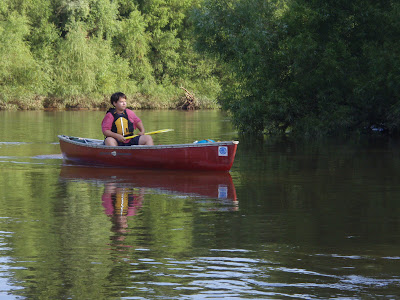  I wear a pfd like this but am shopping for something better fitting.  and my paddles...I have several paddles depending on where I'm going.
|

|

|
| The Following 3 Users Say Thank You to afixer For This Useful Post: |
|
01-02-2011, 04:45 PM
|
#2 |
|
Senior Member
How Do You Identify?:
Femme Preferred Pronoun?:
She, please Relationship Status:
Loved Up Join Date: Nov 2009
Location: Western MA
Posts: 2,183
Thanks: 9,001
Thanked 6,551 Times in 1,552 Posts
Rep Power: 21474854 |

Great thread, thank you!
I love kayaking. I love the truly unique vantage point and experience I have in the water in a kayak: the proximity to birds and fish - the views of land - the quietness & peacefulness of it. I learned in a white water kayak and it is still my favorite "medium", but I don't get to do it very often these days. I've been moving around quite a lot over the course of the last ten years, so I don't have any of my own equipment right now. I rent equipment and go whenever I can, where ever I am. I often get out on fresh water and slow rivers in my local area; I get out in a sea kayak a couple times a year off the coast of Cape Cod and very occasionally I get the opportunity to kayak in white water. In November I went out in sea kayaks off the Island of Hawai'i, that was truly amazing - I was kayaking with huge sea turtles and dolphins.
__________________
I am made of stars |
|
|
|
|
01-02-2011, 05:09 PM
|
#3 |
|
Senior Member
How Do You Identify?:
With my drivers Lic. Preferred Pronoun?:
Gentleman.. Depends on the Situation. Relationship Status:
Last Rodeo, what a ride, many sunrises & sunsets to be had... Join Date: Nov 2009
Location: where a realtor had me sign the dotted line
Posts: 1,901
Thanks: 6,466
Thanked 5,456 Times in 1,450 Posts
Rep Power: 21474854  |
Oh the Envy... You scored Afixer on the canoe! Hope you get to finish fixing it up and posting pictures! Thank you for sharing. And I love that you could show what model kayak you have! Mine is old, and you really can't find pics online anymore, lol. Guess I will have to take pics of mine later. The original Aquaterra Prism trademark was taken over by Perseption kayaks, so needless to say they stopped making this model. Out dated like me
 Sparkle, I love how you descibe the view of seeing it at birds view. Being able to see things that you don't get to see being on land. For me, I have never really river yaked, I do have an adventurous mind to try white water. But have only been a wave rider and angler yaker. Wow, now I really want to try river/white water challenge, sounds exciting. |
|
|
|
|
01-02-2011, 05:39 PM
|
#4 |
|
Senior Member
How Do You Identify?:
Femme Preferred Pronoun?:
She, please Relationship Status:
Loved Up Join Date: Nov 2009
Location: Western MA
Posts: 2,183
Thanks: 9,001
Thanked 6,551 Times in 1,552 Posts
Rep Power: 21474854 |
The perspective is great and its different from other types of boating experiences; when I am in a kayak I really feel I am experiencing the water (like when I swim or snorkel). In canoes/boats/motorized boats - I feel like I am on top of the water, but in a kayak I feel I am IN it.
White Water kayaking is very exciting and challenging. It is also the most expensive way to kayak; the boat and paddles are more expensive and they get banged up much more quickly, and if you are renting equipment you need a helmet and a wet suit and certification/proof of experience at different rapids levels. But the boats themselves are very cool, so small and agile. Turasultana, I've always wanted to kayak the Hudson around Manhattan but the boat traffic (BIG boat traffic, specifically, has always intimidated me).
__________________
I am made of stars |
|
|
|
|
01-02-2011, 05:57 PM
|
#5 |
|
Senior Member
How Do You Identify?:
With my drivers Lic. Preferred Pronoun?:
Gentleman.. Depends on the Situation. Relationship Status:
Last Rodeo, what a ride, many sunrises & sunsets to be had... Join Date: Nov 2009
Location: where a realtor had me sign the dotted line
Posts: 1,901
Thanks: 6,466
Thanked 5,456 Times in 1,450 Posts
Rep Power: 21474854 |
 Yesssssss I found pics online of my model  My yak is like the white one on the picture above, but I rigged it for fishing. Putting a Scotty rod holder, rod pipes behind the seat, and making a PVC rocket launcher to hold 5 poles or a net and 4 poles, lol. The only dislike of this model is the hatches leak if flipped making it an awful time trying to right it back. So I try hard not to turtle. |
|
|
|
| The Following 3 Users Say Thank You to Blaze For This Useful Post: |
|
01-02-2011, 06:01 PM
|
#6 | |
|
Member
How Do You Identify?:
human Preferred Pronoun?:
ma'am Relationship Status:
adrift in my head Join Date: Jan 2010
Location: in and out of the woods
Posts: 989
Thanks: 491
Thanked 1,507 Times in 659 Posts
Rep Power: 8660555 |
Quote:
and this places rents. Hudson Valley Outfitter's I may have to try them out next spring.
|
|
|
|
|
| The Following User Says Thank You to afixer For This Useful Post: |
|
01-03-2011, 03:54 AM
|
#7 |
|
Senior Member
How Do You Identify?:
With my drivers Lic. Preferred Pronoun?:
Gentleman.. Depends on the Situation. Relationship Status:
Last Rodeo, what a ride, many sunrises & sunsets to be had... Join Date: Nov 2009
Location: where a realtor had me sign the dotted line
Posts: 1,901
Thanks: 6,466
Thanked 5,456 Times in 1,450 Posts
Rep Power: 21474854 |
River yaking Part 1
Information on River Safety:
 RIVER SAFETY Top 10 River Safety Tips 1. Tell someone where you are going, when you expect to return, and where to call if you don't. 2. Make sure that your water skills and experience are equal to the river and the conditions. 3. Never boat alone. Always have at least one (preferrably two) other boats with you on a river trip. 4. Wear a Coast Guard approved type III-V, properly adjusted lifejacket at all times when you are in or near the river. 5. Know your limits of swimmers rescue and self rescue on rivers. 6. Know when and how to swim for the eddy. 7. Reduce injuries by wearing protective foot wear and proper clothing designed for river recreation. 8. Be prepared for extremes in weather, especially cold. 9. Know about hypothermia and how it can affect you. 10. Plan your trip and stick to your plan. International Scale of River Difficulty Flat Water A - Pools, lakes, or rivers with velocity under 2 MPH. B - Rivers with velocity 2-4 MPH. C - Rivers with velocity over 4 MPH. May have sharp bends or obstructions. Whitewater CLASS I - Moving water a few riffles and small waves. Few or no obstructions. CLASS II - Easy rapids with waves up to three feet, and wide, clear channels that are obvious without scouting. Some maneuvering is required. CLASS III - Rapids with high, irregular waves often capable of swamping an open canoe. Narrow passages that often require complex maneuvering. May require scouting from shore. CLASS IV - Long, difficult rapids, with constricted passages that often require precise maneuvering in very turbulent waters. Scouting from shore is often necessary, and conditions make rescue difficult. Generally not possible for open canoes. Boaters in covered canoes and kayaks should be able to Eskimo roll. CLASS V - Extremely difficult, long and very violent rapids with highly congested routes that nearly always must be scouted from shore. Rescue conditions are difficult and there is significant hazard to life in event of a mishap. Ability to Eskimo roll is essential for kayaks and canoes. CLASS VI - Difficulties of Class V carried to the extreme of navigability. Nearly impossible and very dangerous. For teams of experts only, after close study and with all precautions taken. Essential Canoeing/Kayaking Equipment and Gear Endlines - Installed on the bow and stern, a line size of 3/8" diameter and 15' long is optimal. Endlines should be stowed to prevent entanglement but be immediately accessible in the event of a mishap. 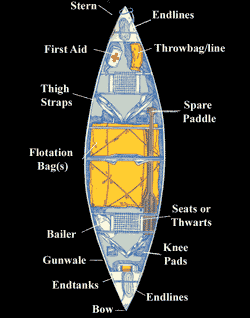 Endtanks/Endbag - Many canoes/kayaks come with built-in flotation in the bow and stern. The flotation should contour the end of the boat whether it is foam block or an inflatable bag. Water Bottle - Be sure to drink plenty of nonalcoholic fluids. Dehydration results from excessive water loss. Take at least one quart of water per person per day. Bailer - Scoop or sponge used to remove lose water from the craft. Spare Paddle - always carry a spare paddle in case yours is lost or breaks. It may be fastened to the canoe but should be quickly accessible in case of an emergency. Flotation Bags - To work best the bags should fit the hull snugly with little or no air spaces. Tie the bags securely in the craft to prevent them from popping out. Thigh Straps - Usually made out of two inch nylon webbing, thigh straps give the paddler more control when maneuvering the craft. Optional class II, recommended class III and above. Seats or Thwarts - Kneeling provides a lower center of gravity and stability through the triangulation of the legs in the bottom of the craft. The lower the height of the seat the more stability can be achieved. Ten to twelve inches above the bottom of the craft is good. Throwline/Throwbag - Sixty to seventy feet of soft braided 3/8" polypropylene line to be used for rescue purposes. Knee Pads - Usually made out of soft foam rubber, knee pads should protect the knees while kneeling. Also, they should affix the knees firmly to the hull. This increases the paddler's ability to maneuver the craft. Choosing River Clothing Cold Water Like standing in a cold shower, cold water can drive the breath from a person upon impact with the water. It disorientates, totally robs a person's strength, quickly numbs the arms and legs, and within minutes the resulting severe pain can cloud rational thought. Finally, hypothermia (exposure) sets in, and without rescue and proper first aid treatment, unconsciousness and death may result. Experts consider water below 70 degrees F to be cold. Some experts use the "100 Degree Rule". If the air and water temperature combined to less than 100 degrees a wet or dry suit is mandatory and the river difficulty is considered one class more difficult than normal (i.e. Class II becomes Class III). To protect against the effects of cold water, the paddler should select and layer clothing properly. One should know how to spot a hypothermic accident before it happens. Always plan a trip appropriately. Lastly, good paddling skills and equipment can often help the paddler avoid a situation which may lead to hypothermia. Cold Weather Clothing Helmet - Wear a good plastic or fiberglass helmet. Make sure that it protects your temples. A helmet is recommended for open canoeists on any river Class III or above. Whistle - A must for communications. The sound of a whistle carries over the roar of the river and much further than that of the human voice. Pouch - For storing valuables including car keys for the shuttle car and money for an emergency phone call. Lifejacket - The lifejacket (PFD) should fit snugly, yet allow freedom of movement. A vest type jacket (type III) is more comfortable to wear, offers better protection to the lower back, and insulates better in cold weather than the inexpensive horse collar jacket (type II). Dry/Wetsuit - Made of rubberized material the drysuit seals the paddler in a water tight shell. Normal paddling clothes can be worn underneath it. Made of neoprene the wetsuit traps and insulates a thin layer of warm water next to the body. Both suits should protect the high heat loss areas of the arm pits, crouch, and neck. Sweater - Worn underneath the drysuit. Wool is good. Polypropylene is better. Avoid cotton. It's ability to "wick" moisture will actually make you colder. Layer your clothes so you can put on or take off layers if you get too hot or cold. Knife - (optional) A knife may be carried to free the paddler in case of entrapment. Safety Rope/ Throw Bag - Many experts carry a nylon sling with a carabiner or a mini-throwbag which can quickly be used to rescue another boater. Booties - Wet suit booties with rubber soles are an ideal choice for cold weather. Also, wet suit socks worn inside rubber-soled sneakers or plastic sandals provide good protection. Pogies - Usually fastened directly to the paddle, pogies or mittens protect the hands and wrists from chilling wind. Paddle - Select a sturdy paddle, one made of fiberglass and aluminum. Wood paddles should be constructed with fiberglass reinforced laminated wood. A "T" grip gives better paddle control in whitewater. Warm Weather Clothing Hat/Helmet - A hat protects from the sun. Wear a helmet in Class II and above rivers. Sunglasses - Choose a good pair of neutral density glasses, with straps if necessary. Shirt - Wearing a shirt reduces the likelihood of sunburn. A cotton shirt "wicks" the water which helps the evaporation process cool the body. Lifejacket - For the summer choose an open mesh design lifejacket for its ability to breath. Choose a vest type or jacket (Type III) for its comfort. Swimsuit pants - Light weight pants over the swimsuit are a good idea even in summer. The sun reflecting off the water and the bottom of the boat can quickly bake the legs. Pouch - For storing valuables including car keys for the shuttle car and money for an emergency phone call. Layering Your Clothing Layered clothes insulate better in cool weather than a single garment of the same thickness. Two medium weight sweaters offer more protection than one heavy sweater. Cover the sweaters with a paddling jacket for even more warmth. To trap in additional heat and keep water out, the paddling jacket should fit tightly around the wrists, neck and waist. Layers can be mixed to maximize the strengths of each layer. Some canoeist use a farmer john type wetsuit (no sleeves and legs) for their first layer coupled with a sweater and a paddling jacket on the next layer. This allows the paddler freedom of movement with the wetsuit providing extra protection if a paddler is immersed in the water. Also with layered clothes the paddler can easily adjust his comfort and heat loss by either putting on another layer or taking one off. |
|
|
|
|
01-03-2011, 03:57 AM
|
#8 |
|
Senior Member
How Do You Identify?:
With my drivers Lic. Preferred Pronoun?:
Gentleman.. Depends on the Situation. Relationship Status:
Last Rodeo, what a ride, many sunrises & sunsets to be had... Join Date: Nov 2009
Location: where a realtor had me sign the dotted line
Posts: 1,901
Thanks: 6,466
Thanked 5,456 Times in 1,450 Posts
Rep Power: 21474854 |
River yaking Part 2
How You Loose Body Heat
The water environment of the paddler greatly increases the potential the potential for heat losses through evaporation and convection. Layering your clothes combines the best properties of each garment to reduce heat loss. A sweater reduces convectional losses by creating dead air spaces in the fabric. A paddling jacket reduces air flow and reflects radiated heat losses from the body back toward the body. The summer paddler also needs to protect himself by wearing a hat to reflect the sun's radiation. Also, a cotton shirt and shorts help cool the body by evaporation. Conduction (e.g. hand on aluminum shaft of paddle) Convection (e.g. wind) Radiation (e.g. unprotected head) Evaporation (e.g. wet lifejacket and wet clothing) Common River Hazards Foot entrapment - Catching a foot in rocks on the bottom of the river. May be caused by trying to stand up while getting swept downstream in water mid-thigh to mid-torso deep. Strainers - Trees or single branches in the current, with river water flowing through, can cause a severe pinning hazard. Strainers many be caused by erosion. Trees can also fall because of old age, floods, and storms. Look for them on wooded riverbanks, along small creeks after high water, often found on the outside of bend, and on less utilized rivers. Always look downstream to spot bobbing twigs or irregular flow patterns. Man Made Entrapments - Manmade objects in the river are inherently more dangerous than most things natural. Keep an eye out for bridge pilings, low head dams, junked cars, any man made object found commonly in urban riverways, highway crossings, and abandonned dam sites. Make it a habit to visually scan downstream. Broaches - Getting pinned on a rock, either amidship or at the ends. Avoid sharp rocks that can potentially crease a boat or serve as point to be wrapped by your kayak! Develop the instinct to lean into the rock with your boat and body leaning together. Undercut Rocks - Undercuts are water features where a slab of rock, or rock shape, forces the current flow to go under the surface. Learn to spot them by the dark shadow on the upstream side of the rock, the lack of pillowing action by oncoming water, and by the lack of a predictable eddy on the downstream side. Most dangerous undercuts are well known by locals, and listed in guidebooks. Entanglement - Getting tangled exiting your boat is most likely to be caused by ropes, and loose lines, in your boat. Practice wet exits and critically evaluate your outfitting for entanglement potential. Treat throw ropes as potential hazards. Keep them neatly bagged, and carry a knife for rescue. Vertical Pins - When the bow buries and gets pinned on the bottom after a steep drop. This is not a concern until you are paddling drops of over 3 or 4 feet. Advanced paddlers prevent them by checking the water depth first, and leaning back and performing a 'boof' move to keep the bow up. Paddling boats with a large volume bow reduces this risk substantially. Hydraulics - have evenly formed backwash, water moving back upstream for four or more feet. Holes with more of a wave shape are intimidating, but typically less hazardous than water flowing smoothly upstream. Dams, and hydraulics that are very regular, and perpendicular to the current are far more dangerous than hydraulics angled with one end downstream. Long Swims - Wearing a tight PFD, matching your ability to an appropriate river, and being dressed for a swim can be excellent defense against a long swim. Another great precaution is a competent group of friends with either a shore or boat based rescue plan. Recognizing and Avoiding Hazardous River Conditions Conditions on rivers can change rapidly in Texas. Before setting out, a paddler should know the flow condition of the reach they are about to paddle. During high flows, the whole river reach may act like one long set of rapids. During high flows, the fast current may draw the unsuspecting paddler into other hazards. These include entrapment in floating debris such as logs, sweepers and strainers. A sweeper is an overhanging branch or tree whose branches extend into moving water from above. Running into a sweeper will push a canoe over or could push and hold the paddler below the surface of the water. A strainer is a submerged tree or branches under the surface of moving water. A paddler could become pinned against a strainer. Submerged hazards, such as rocks, logs and other debris, are not easily seen in turbulent water. A collision can cause the boat to upset; the hull may be punctured, or the paddler may be injured in the collision. Once out of the canoe, the canoeist may be overcome by the current or pinned by the canoe. A swamped canoe can weigh as much as two tons and a paddler can be crushed between a canoe and a rock. Cold water (less that 15° C) can be lethal. During spring conditions or in late fall, the river water is cold, and if you spill you can very quickly be overcome with hypothermia. Even if the paddler reaches shore, wind chill and cold air temperatures can accelerate the dangerous drop in body temperature. Shivering is an indication of the onset of hypothermia, and victims usually become too disoriented to be responsible for their own safety. A riverbank is often well removed from emergency services and homes where help can be obtained. The tough reality is that you may be on your own to deal with a life-threatening situation. The tough reality too is that a paddler in danger may also be putting a rescuer's life in jeopardy. Whenever you are on the river, it is important that you are prepared to deal with an emergency. Know where access points are along the reach of river that you are canoeing. Have a map of the reach that you are canoeing. Have a first aid kit and know basic first aid. Finally, a cellular phone in a waterproof bag may be invaluable in contacting help or emergency services. Low head dams pose a special hazard to paddlers. In the fast waters, an upstream paddler may get too close to the crest of the dam and be swept over. A paddler may also get caught in the backwash current at the downstream side of the dam. Once in the backwash current, the paddler becomes trapped. Paddlers should use portages around these structures, and stay well clear of low head dams at any time of the year. Boating safety awareness is not limited to the cold-water seasons. There are good solid rules that must be observed by prudent and safety conscious paddlers everywhere. Boating courses are an enjoyable way to prepare for any kind of boating. Like the Boy Scouts advocate-be prepared. Being prepared before your trip can help avoid potential hazards or result in a positive outcome if an accident does occur. One of the most important considerations is a trip or float plan. Let someone know where you are canoeing, what your boat looks like and when you expect to return. |
|
|
|
| The Following User Says Thank You to Blaze For This Useful Post: |
|
01-03-2011, 03:38 PM
|
#9 | |
|
Member
How Do You Identify?:
Queer Femme Preferred Pronoun?:
she Relationship Status:
spoken for Join Date: Nov 2009
Location: brooklyn
Posts: 432
Thanks: 226
Thanked 713 Times in 249 Posts
Rep Power: 2043786 |
Quote:
Just be careful crossing the river or a taxi stop, the boats can be on top of you quicker than you expect. Its fun really.
|
|
|
|
|
|
01-03-2011, 04:24 PM
|
#10 |
|
Senior Member
How Do You Identify?:
With my drivers Lic. Preferred Pronoun?:
Gentleman.. Depends on the Situation. Relationship Status:
Last Rodeo, what a ride, many sunrises & sunsets to be had... Join Date: Nov 2009
Location: where a realtor had me sign the dotted line
Posts: 1,901
Thanks: 6,466
Thanked 5,456 Times in 1,450 Posts
Rep Power: 21474854 |
This link show's you how to fix a hole in your yak, plastic welding.
There are plenty of write ups on the topic, however a video reference is always good. So, if you ever have a need for a DIY repair, the video will hopefully help. http://www.teamoceankayak.com/videos/weld/index.html Tools needed: Repair/patch plastic (Old pickle buckets make good material) Dremel Sauteing Iron |
|
|
|
| The Following User Says Thank You to Blaze For This Useful Post: |
|
01-03-2011, 04:32 PM
|
#11 |
|
Senior Member
How Do You Identify?:
With my drivers Lic. Preferred Pronoun?:
Gentleman.. Depends on the Situation. Relationship Status:
Last Rodeo, what a ride, many sunrises & sunsets to be had... Join Date: Nov 2009
Location: where a realtor had me sign the dotted line
Posts: 1,901
Thanks: 6,466
Thanked 5,456 Times in 1,450 Posts
Rep Power: 21474854 |
How to make a milk crate cart
Here's is a simple kayak cart I made by incorporating the milkcrate as the frame of the cart. When not used as a cart, the milkcrate can be used as a milkcrate (?) in the tank well. The frame post turns into four rod holders. The only items you need to stow when you reached your destination is break down the PVC T-cap, the wheels,shaft, two washers, pin and tennis balls. Here is the material cost: one - Milk Crate ?? one - 1 1/2 inch x 10 feet PVC pipe $4.29 four -90 degree elbow $0.56 each four -T-connector $1.29 each one - 1/2 inch aluminum bar $3.98 two - washer $0.09 two - Cotter pin $0.56 two - 13 1/2 inch plastic wheel $4.00 (or 12 inch with bearing $9.95 each) one - Strap ?? Total $24.97 (Aug 2007) The wheels are from Northern Tools, everything else are from HomeDepot. The plus of the design is that it's a very simple design. It's also simple to build. The 13.5 inch wheel is bigger than anything I've seen out there. You can also cut the shaft longer and put 4 wheels instead of two to give you more stability and to give you the ability to go over soft sand. The minus of the design is that you do need some tools to cut the PCV pipe, 1/2 drill bit and drill to put holes in the pcv pipe, the side of the crate and the tennis ball, 1/16 inch drill bit for the cotter pin hole in the shaft. You also need pcv cement. Because the wheels a only about 15 inch apart, it's not as stable as store bought cart but as long as you keep that limitation in mind when you carting the kayak around, you should be ok. It does well in deep grass. I can go over the curb with a good pull. I have not tested it in deep sand. NOTE: The wheels on the pictures are the 12 inch wheels. I had since purchased the 13.5 inch wheels. The 12 inch wheels are $9.95 each. The tires are inflatable and there are ball bearings on the shafts. The $4.00 plastic wheels are hard plastic like lawn mower wheels with no bearings. Videos: [nomedia="http://www.youtube.com/watch?v=IGSXOoHBpIk"]YouTube - Homemade Milkcrate Kayak Cart (Assembly)[/nomedia] [nomedia="http://www.youtube.com/watch?v=rNxq3fQAr0M"]YouTube - Milkcrate Kayak Cart Disassembly[/nomedia] [nomedia="http://www.youtube.com/watch?v=cVzBcGcq-3o"]YouTube - Milkcrate Kayak Cart - Over the curb test[/nomedia] Pictures: 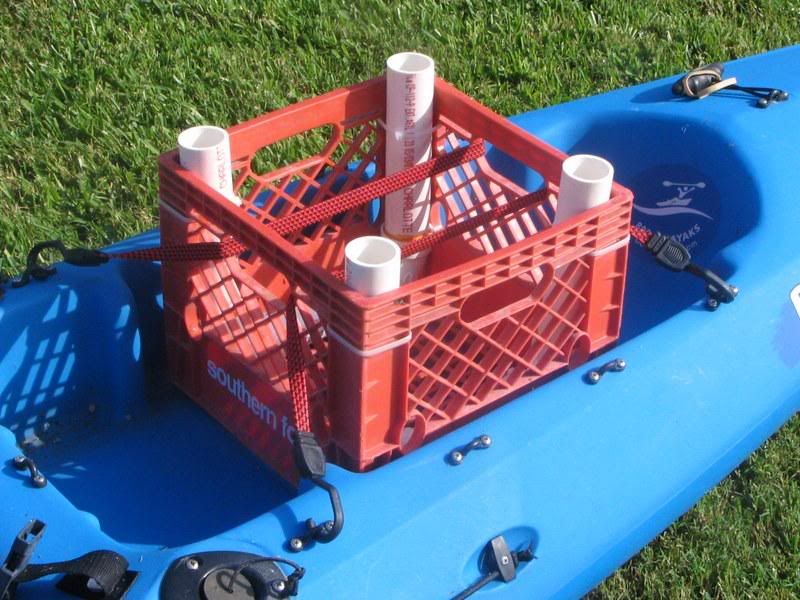 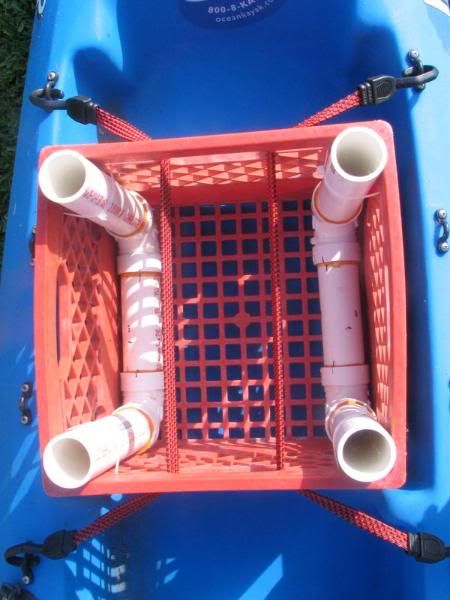 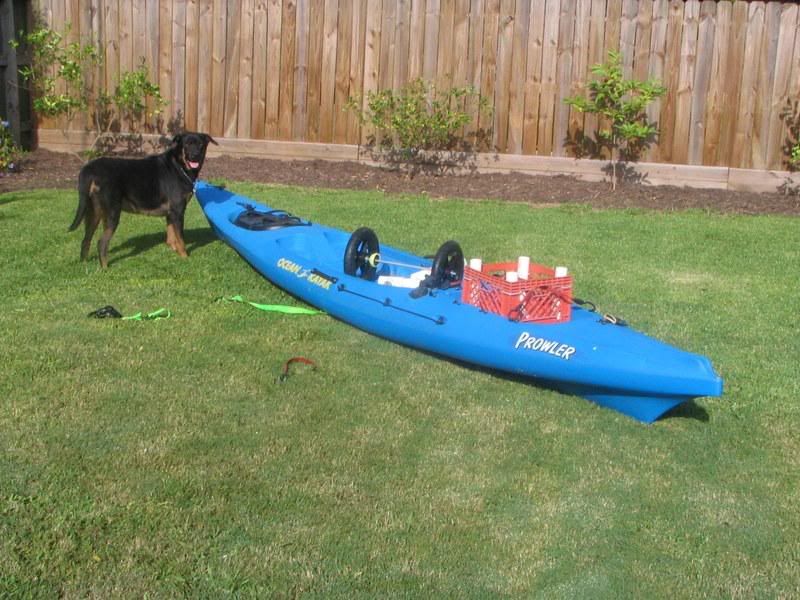 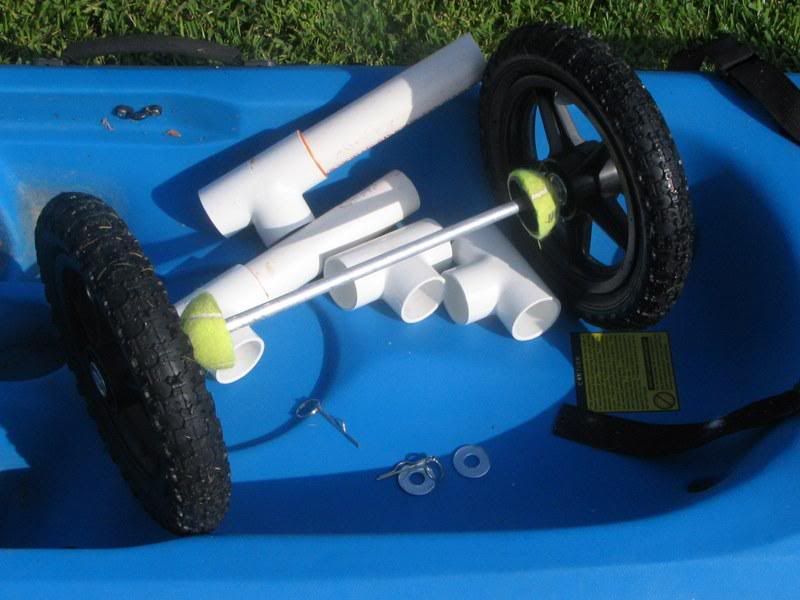 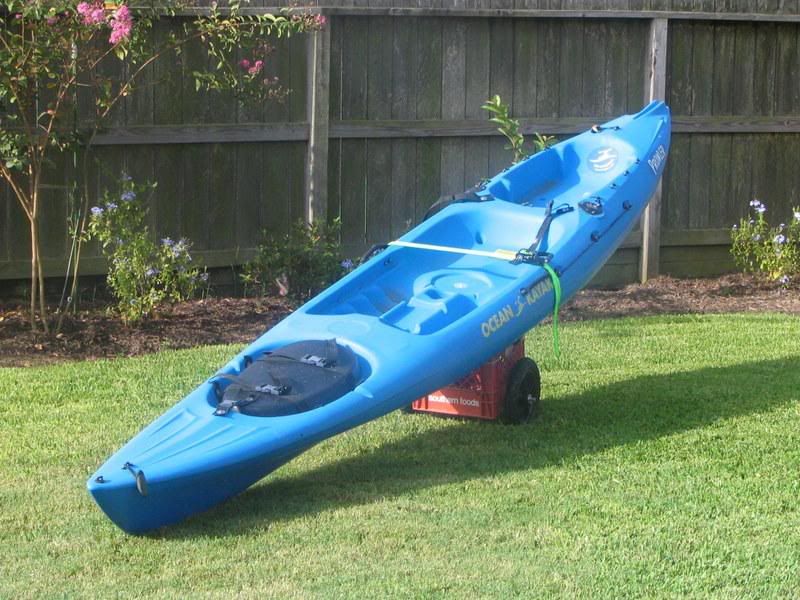 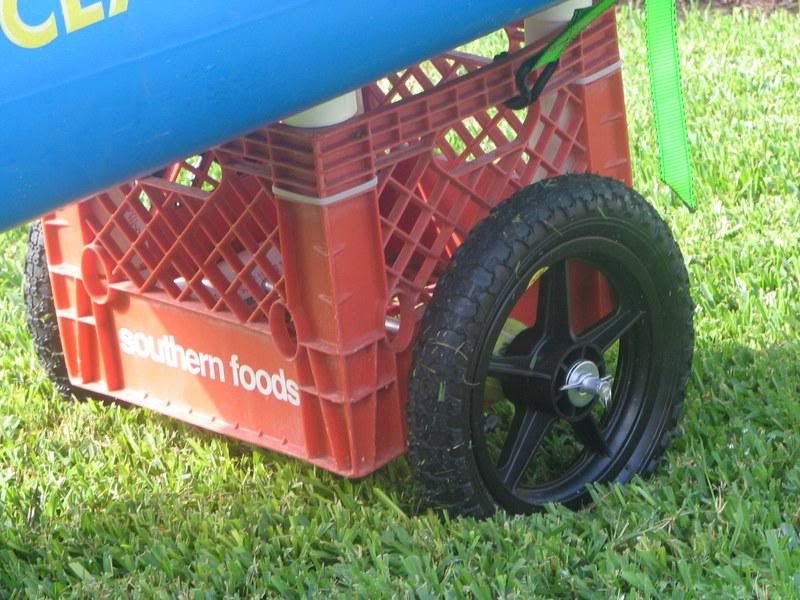 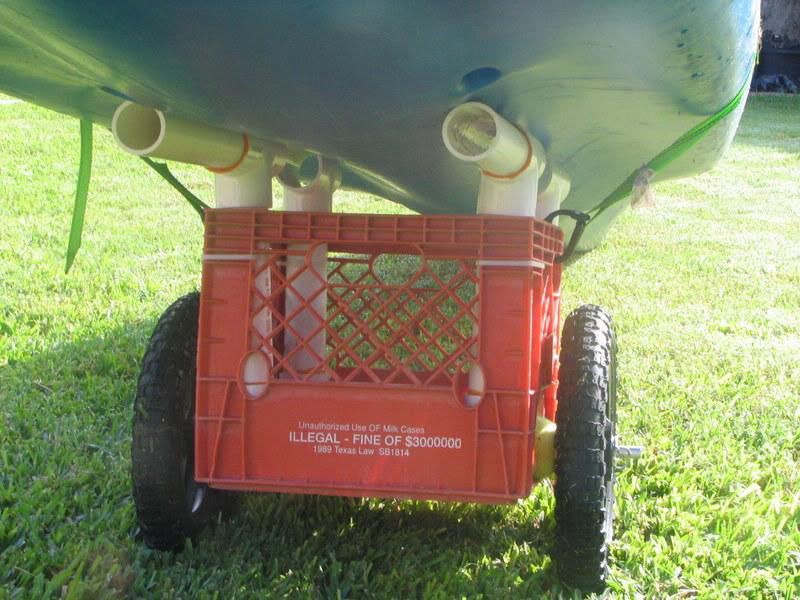 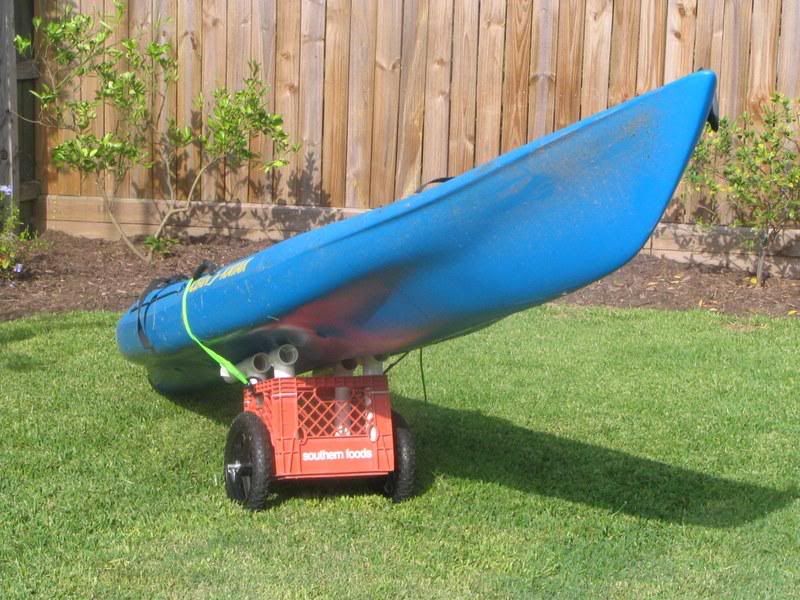 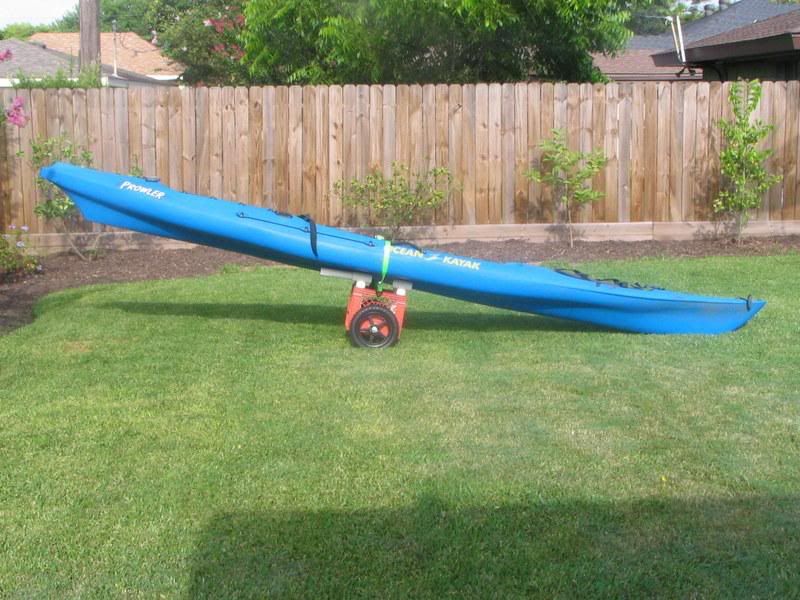
|
|
|
|
|
01-03-2011, 03:11 PM
|
#12 |
|
Member
How Do You Identify?:
human Preferred Pronoun?:
ma'am Relationship Status:
adrift in my head Join Date: Jan 2010
Location: in and out of the woods
Posts: 989
Thanks: 491
Thanked 1,507 Times in 659 Posts
Rep Power: 8660555 |
from my home town
my dream (whitewater) boat and finally a boat for the fishing folks |
|
|
|
|
| Thread Tools | |
| Display Modes | |
|
|


 Hybrid Mode
