
|
 10-19-2012, 08:40 AM
|
#15 |
|
Member
How Do You Identify?:
FTM/Male (Will 14) Relationship Status:
Caught An Angel and she doesn't lie! Join Date: May 2012
Location: @
Posts: 784
Thanks: 2,256
Thanked 1,857 Times in 614 Posts
Rep Power: 21474850   |
 Bullock's Oriole
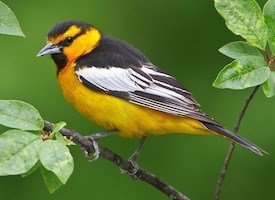 Cool Facts The Bullock's Oriole hybridizes extensively with the Baltimore Oriole where their ranges overlap in the Great Plains. The two species were considered the same for a while and called the Northern Oriole, but recently, they were separated again. Molecular studies of the oriole genus indicate that the two species are not very closely related. The Bullock's Oriole's nest is not always placed in territory where the male advertises. Both sexes of Bullock's Oriole sing, but the males and females sing different songs. The song of the female is similar to that of the male, but it ends differently and with harsher notes. Early in nesting period, and before and during nest-building, the female sings regularly, and may sing more than the male. Other Names Northern Oriole (in part) Oriole de Bullock, Oriole à ailes blanches (French) Bolsero calandria (Spanish) Cool Facts The Bullock's Oriole hybridizes extensively with the Baltimore Oriole where their ranges overlap in the Great Plains. The two species were considered the same for a while and called the Northern Oriole, but recently, they were separated again. Molecular studies of the oriole genus indicate that the two species are not very closely related. The Bullock's Oriole's nest is not always placed in territory where the male advertises. Both sexes of Bullock's Oriole sing, but the males and females sing different songs. The song of the female is similar to that of the male, but it ends differently and with harsher notes. Early in nesting period, and before and during nest-building, the female sings regularly, and may sing more than the male. Habitat Open Woodland Riparian and open woodlands, or woodlots with tall trees, including parklands. Winters in riparian woodlands and woodland edge, with some in pine, pine-oak, or fir forests. Food Insects Caterpillars, fruits, insects, spiders, and nectar. Nest Description Hanging nest, neatly woven of hair (especially horsehair), twine, fibers, grasses, and wool, lined with cottonwood or willow cotton, wool, or feathers. Placed in isolated trees, at edges of woodlands, along watercourses, in shelterbelts, and in urban parks, often near water. Nest Placement Gleans and probes in trees and flowers for insects and nectar. Visits feeders for sugar water. A beautiful bird |

|

|
| The Following 5 Users Say Thank You to DMW For This Useful Post: |
| Tags |
| bees, birds, fun, images, insects |
| Thread Tools | |
| Display Modes | |
|
|


 Threaded Mode